
The Mountain Kilimanjaro - Rongai Route (7 Days / 6 Nights)
Paradise LoveBirds Safaris
Duration
7 Days / 6 Nights
Destinations
Mountain Kilimanjaro
Best Season
June–October & December–March
ITENARIES
Overview
The Rongai Route is the only northern approach to Kilimanjaro, offering a quiet and remote wilderness experience. Known for its gentle gradient and dry conditions, it provides a comfortable acclimatization profile with stunning views of Mawenzi Peak, wide open landscapes, and a beautiful summit approach.
Duration: 7 Days / 6 Nights, Accommodation: Tented camps ,Difficulty: Challenging, Best For: Trekkers seeking a quieter, less crowded route with excellent scenery and a high summit success rate.
DAY 1: Rongai Gate - Simba Camp
- After registration at Rongai Gate, the trek begins through rural farmland and patches of forest. Expect gentle terrain, fresh mountain air, and possible sightings of colobus monkeys before reaching Simba Camp on the edge of the moorland zone.
- Elevation: 1,950m to 2,620m
- Hiking Time: 3–4 hours
- Habitat: Rainforest / Heath
- Meals: Lunch & Dinner
DAY 2: Simba Camp to Second Cave Camp
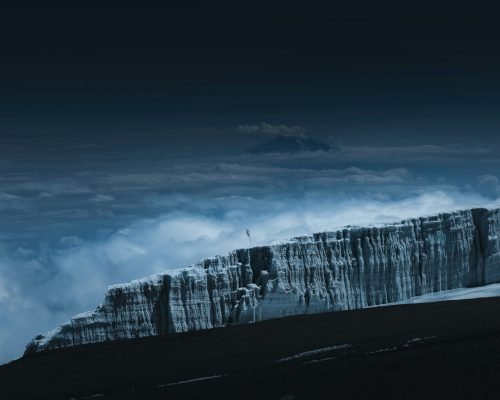
- A steady ascent brings you into open moorland, with impressive views of Kibo’s eastern glaciers. The trail is wide and easy, ideal for gradual acclimatization.
- Elevation: 2,620m to 3,450m
- Hiking Time: 3–4 hours
- Habitat: Moorland
DAY 3: Second Cave to Kikelewa Camp
- After breakfast, continue ascending across vast, dry moorland with stunning views of the volcanic peak Mawenzi. The landscape becomes more rugged as you approach the beautiful Kikelewa valley.
- Elevation: 3,450m to 3,600m
- Hiking Time: 3–4 hours
- Habitat: Moorland
DAY 4: Kikelewa Camp to Mawenzi Tarn Camp
- A short but steep climb leads you to one of Kilimanjaro’s most picturesque campsites—Mawenzi Tarn. Nestled beneath Mawenzi Peak, this natural amphitheater offers dramatic scenery.
- Elevation: 3,600m to 4,330m
- Hiking Time: 4–5 hours
- Habitat: Alpine desert
DAY 5: Acclimatization Day at Mawenzi Tarn
- Spend the day exploring the surrounding ridges or relaxing at camp. This acclimatization day significantly improves your summit success rate and allows your body to adapt to the high altitude.
- Elevation: 4,330m (no major elevation gain)
- Hiking Time: 1–2 hours (optional hikes)
- Habitat: Alpine desert
DAY 6: Mawenzi Tarn to Kibo Hut
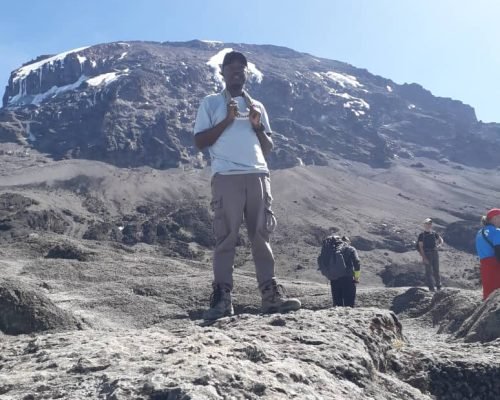
- Cross the wide and barren “Saddle” between Mawenzi and Kibo. The landscape resembles a lunar desert. Arrive at Kibo Hut in the afternoon, rest, and prepare for the midnight summit push.
- Elevation: 4,330m to 4,700m
- Hiking Time: 4–5 hours
- Habitat: Arctic zone
DAY 7: Summit Attempt – Kibo to Uhuru Peak → Horombo Hut
- Start the summit trek at midnight. The steepest section leads to Gilman’s Point (5,685m) at sunrise. Continue along the crater rim to Uhuru Peak, the highest point in Africa. After celebrations and photos, descend to Kibo for brunch and continue down to Horombo Hut for overnight rest.
- Elevation: 4,700m to 5,895m → 3,720m
- Hiking Time: 10–14 hours
- Habitat: Arctic Zone → Moorland
What to pack
- Head lamp - 1pc
- Balaclava - 1pc
- Sun glass - 1pc
- Warm hat - 1pc
- Sun hat - 1pc
- Base Layer - 2pcs
- Top fleece - 2pcs
- Warm jacket/down jacket - 1pc
- Poncho - 1pc
- Long underwear - 2/3 pcs
- Sleeping bag - 1pc
- Warm trouser - 1pc
- Walk trouser - 2pcs
- Lip bum
- Sun cream lotion
What to pack
- Ski pant - 1pc
- Rain pant - 1pc
- Thin socks - 3pcs
- Thick socks - 3pcs
- Mountain Boot - 1pc
- Tennis shoe - 1pc
- Gators - 1pc
- Thin warm gloves - 1pc
- Thick Warm glove - 1pc
- Duffel bag/ rucksack - 1pc
- Day pack - 1pc
- Walking poles - 1pc
- Rain jacket/ wind breaker jacket
- First Aid Kit
- Baby wipes
Mountain crew
Apart from you, the mountain crew who accompany you are the most important people in Kilimanjaro. A good mountain crew will deliver an unforgettable summit – climb for all climbers. Experience is important to our crew, we have guides, cooks and porters who have been hiking Kilimanjaro well for over one hundred times– that experience is invaluable. Our guides are well trained, passionate and well knowledged on the flora and fauna of Mountain Kilimanjaro, and have gone through different First Aid courses in case of any emergency on the mountain. They are also very good at spotting altitude sickness and know what to do once it is spotted.
Money Matters
Visa and Mastercard are widely accepted in Tanzania , but note that American Express and Diners club are not accepted. In certain places, cash will be the only acceptable method of payment. Travelers should not rely on traveler’s cheques as these are not accepted in Tanzania .
The US dollar is always the best currency to carry and its important that the bank notes you bring have been printed after the year 2006, as older notes are often not accepted.
Tipping
Tipping is of course discretionary, but is an expected part of the way in which business is done in Tanzania. It counts as an expression of gratitude to those who – hopefully have made your experience an unforgettable one and enable you to directly reward those people.
We realize that both the process of giving tips and knowing how much to give can be difficult, so we provide the following guidance.
At the end of the climb, it is a good idea to hold a “Tipping ceremony” after breakfast on the last day the team gather and start singing some of the Kilimanjaro songs and after client/clients can have words to say to the crew and a leading guide will speak on behalf of the crew.
Tips can be placed in an envelope and given to the lead guide, who can distribute them to the crew (it is advisable to announces total amount in front of the group, so that all crew member are aware of how much is to be distributed) it is recommended the client can give from 250 US$ – 300 US$ per person per whole trip. An alternative method which mostly trekkers prefer is to give individual tips to the crew members, in which case the following amount can be used to guidance.
Chief guide $ 25US per day/per group
Assistant guide $20US per day/per group
Mountain chef $15US per day/per group
Mountain porter $8-10 US per day/per group
Giving more is also allowed. The above figures are only for guidance and can of course be varied at the trekker’s discretion. Gift of clothes, boots etc are also appreciated.